Classroom Management
Explore this Guide
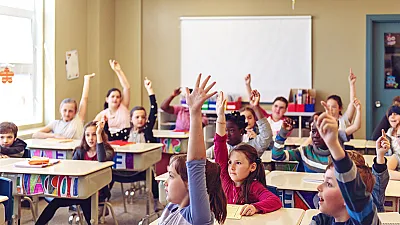
Every teacher knows the benefits of effective classroom management: a positive environment where learning comes first. These standards-aligned resources help you embed management strategies from day one — and every one introduces students to learning about, and combating, the climate crisis.
Key takeaway: Seven free resources that build routines, relationships, and a positive climate — for the classroom and the planet.
Back to School Bundles
One ready-made bundle per grade band: slides, worksheets, displays, and goal-setting to open the year strong.

Back to School Activities for Grades K-2
Grades K–2 · Science · ELA · Art · SEL · Presentation Slides · Activity · Worksheet · Artwork
- Set up classroom structure with coloring sheets and get-to-know-you pages
- Post customizable daily-schedule displays before day one
- Rehearse transitions with songs or nonverbal cues students help create
Back to School Activities for Grades 3-5
Grades 3–5 · Science · Social Studies · ELA · Art · SEL · Presentation Slides · Activity · Worksheet · Artwork
- Build relationships fast with differentiated About Me worksheets
- Set one day-one target and one semester SMART goal per student
- Model the sheet on the board to scaffold students who need support
Back to School Activities for Middle School
Grades 6–8 · Science · Social Studies · ELA · Art · SEL · Presentation Slides · Activity · Artwork
- Open every period with a Bell Ringer question on the board
- Let early finishers move to Goal Setting worksheets for differentiation
- Sequence prompts from wellbeing to nature to climate emotions
Back to School Activities for High School
Grades 9–12 · Science · Social Studies · ELA · Art · SEL · Presentation Slides · Artwork · Activity
- Set reliable routines with planning pages and Bell Ringer starters
- Run ten-minute brain breaks for the Letter to Myself reflection
- Build toward a student-voice feedback activity after two weeks
Displays & Problem-Solving
Let the walls and the students do some of the managing: mindsets on display, behaviors made explicit.
Growth Mindset Classroom Posters
Grades K–12 · Science · Social Studies · ELA · Art · SEL · Artwork · Presentation Slides
- Hang real-world climate heroes, from Greta Thunberg to Jane Goodall
- Spark discussion on classroom norms for hard topics
- Assign a poster figure for independent mindset research
Note: Live lists this as high-school; the guide covers K–12 — check the slides for your band.
View Posters ➜
Solving Problems: Social Studies Lesson
Grades 6–8 · Social Studies · Career Readiness · Lesson Plan
- Open with the Knot Game, then reflect on group problem-solving
- Investigate the ozone hole to name strategies that fix big problems
- Write a guide for solving a climate problem students choose
Note: Live title: ‘Solving Problems: Social Studies Lesson’.
View Lesson ➜Take It Outdoors
For the students no indoor strategy reaches: leave the classroom and watch behavior transform.
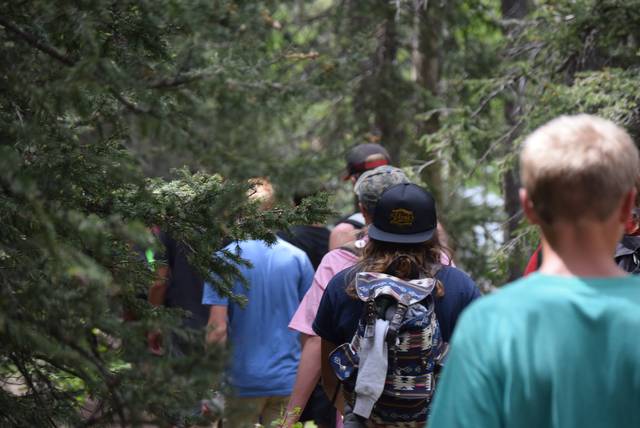
Living Schoolyard Activity Guide
Grades K–12 · Science · Social Studies · ELA · Art · Health · SEL · Engineering · Guide · Activity · Outdoors
- Start elementary with ‘The Tree Is Like Me’ on Page 72
- Open a middle-school environment unit with ‘How Many Honey Bees’ on Page 95
- Challenge high-school STEM with ‘Passive Quadrat Sampling’ on Page 132
Next Steps
Frequently asked questions
Which bundle fits my grade band?
K–2: structure and transitions with Captain Climate. 3–5: relationships, About Me sheets, and SMART goals. 6–8: Bell Ringers, planners, and goal-setting. 9–12: routines, starters, and the Letter to Myself reflection.
How do the Growth Mindset Posters help with management?
They put behavior norms on the walls: real climate heroes model a growth mindset, spark discussion of classroom language, and give students figures to research independently.
What if some students still struggle indoors?
Take them outside. The Living Schoolyard Activity Guide is built for exactly that, with outdoor tasks for every age — try Page 72, 95, or 132 as a starting point.
How does the Solving Problems lesson teach behavior?
Students play the Knot Game, reflect on group strategies, study the ozone-hole fix, then write their own problem-solving guide — metacognition that builds self-regulation.
Are these resources free and standards-aligned?
Yes. All seven resources are free for educational use with proper attribution, and each introduces students to learning about and combating the climate crisis.
Who wrote this guide?
Tim Mac, an English teacher who taught in Portsmouth, England, and Bahrain for six years — see his bio below.
About the author

Tim Mac
English Teacher
Originally from Florida, Tim Mac attended school and university in the UK. After training as an English teacher, he taught in Portsmouth, England, and in a British school in Bahrain for six years. He has recently moved to Sligo, Ireland, where he is busy getting reacquainted with the concept of rain.