
Menu
Home Teaching Materials Teacher Guides Educator Support About Us Donate
Teacher Guide · Climate Communication

Dr. Katharine Hayhoe: Teaching Climate Hope & Conversation

Help students find hope, and their voice, in the climate conversation with free videos, articles, and classroom activities featuring climate scientist Dr. Katharine Hayhoe.

7 classroom resources Grades 3–12 Free to use
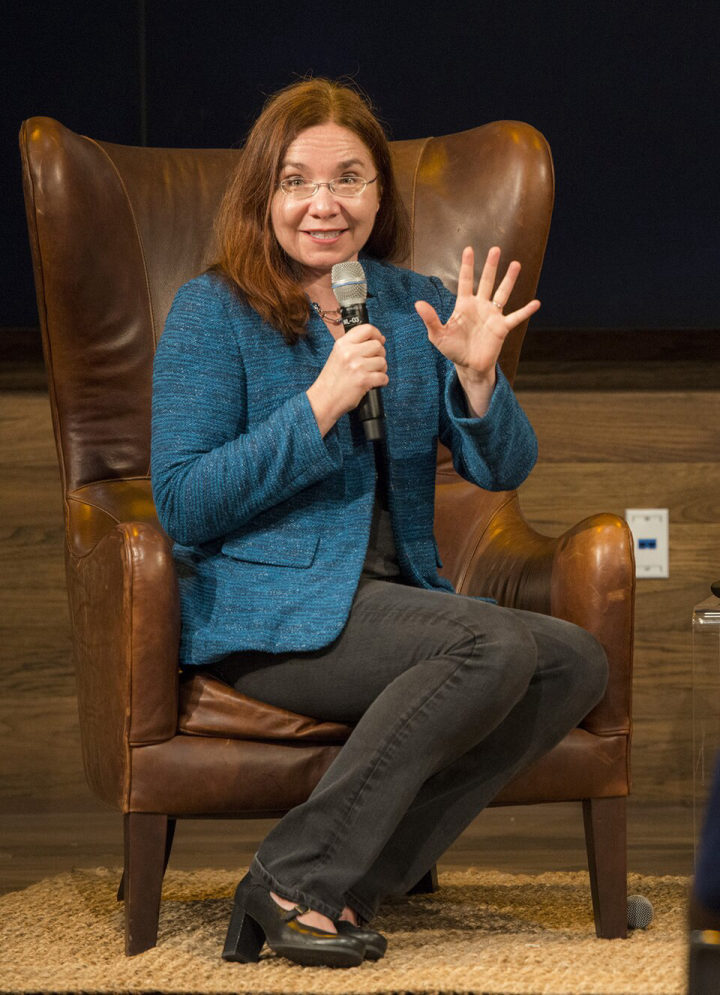
Portrait of climate scientist Dr. Katharine Hayhoe

“The most important thing you can do to fight climate change is talk about it.”

Dr. Katharine Hayhoe

Photo: Jay Godwin / LBJ Presidential Library, public domain, via Wikimedia Commons

Honor the work of Dr. Katharine Hayhoe by helping your students see that climate change is not a distant problem, and that talking about it is one of the most powerful things any of us can do. This collection brings together talks, interviews, and articles featuring the climate scientist known for connecting climate change to the things people already love.

Dr. Hayhoe is a climate scientist, Chief Scientist at The Nature Conservancy, a professor at Texas Tech University, and the author of Saving Us: A Climate Scientist's Case for Hope and Healing in a Divided World. Her work centers on a simple idea: facts alone rarely change minds, but shared values, honest conversation, and visible solutions can.

Whether you are exploring “global weirding” with younger students, analyzing extreme weather in middle school, or discussing climate doomerism and hope in high school, these teacher-reviewed resources will help you bring her approach into your classroom.

Classroom Resources

Videos, articles, and activities featuring Dr. Hayhoe

Start with the two-minute introduction, then follow the conversation wherever your curriculum leads.

Halton Environmental Network· Grades 6–12· Video

Dr. Katharine Hayhoe – How to Talk About Climate Change

In this two-minute video, Dr. Hayhoe explains how to talk about climate change and reminds viewers that they are not alone. Use it to launch a climate conversation project, or to close a unit by having students practice a short conversation in pairs.

View Resource

Future Chicken!· Grades 3–5· Video

Why Dr. Katharine Hayhoe Calls it Global Weirding

A lighthearted interview in which Dr. Hayhoe explains why she calls climate change “global weirding,” how weather patterns are changing, and why individual actions still matter. The word-association game makes a fun warm-up.

View Resource
TED· Grades 9–12, AP· Video

The Key to Fighting Climate Change: Talk About It

In her TED talk, Dr. Hayhoe makes the case that talking about climate change is the most powerful action an individual can take. She shows why leading with the heart (“What do you love most on Earth?”) can be more persuasive than leading with data.

View Resource
NowThis Earth· Grades 6–12· Video

How Climate Change Has Intensified Hurricane Season

This video uses hurricanes like Ida and Harvey to show how a warmer ocean fuels storms that are stronger, slower, and wetter. Dr. Hayhoe explains the connection between ocean heat and extreme weather, with footage from the Gulf Coast.

View Resource
The Nature Conservancy· Grades 9–12· Article

A Climate for All of Us

Dr. Hayhoe explains how human activity is warming the planet, why extreme weather is becoming more likely, and why climate change is an issue of justice. The article closes with personal actions, conversations, and advocacy that can drive change.

View Resource
Talking Climate· Grades 9–12· Article

Are We Really Doomed?

Dr. Hayhoe examines climate doomerism, the belief that nothing can be done, and explains why giving up would guarantee failure. She points to the many people who want more climate action and shows how conversations and solutions build momentum.

View Resource
Project Drawdown· Grades 9–12, AP· Video · 53 min

Where Does Climate Action Go From Here?

In this 53-minute conversation, Jonathan Foley and Dr. Hayhoe discuss doomerism, the co-benefits of climate solutions, and how to connect others to action. Consider showing a selected segment and closing with a hope-focused discussion.

View Resource
FAQ

Climate change communication, answered

Why talking about climate change is a strategy, and how to do it well with students.

What is climate change communication?

Climate change communication is the practice of sharing climate science and solutions in ways people can understand, trust, and act on. It includes everyday conversations, classroom teaching, storytelling, and public messaging. Done well, it connects climate change to what people already care about: their families, health, work, and community, rather than leading with abstract data.

Learn more: Top Evidence-Based Climate Communications Tips

Why is talking about climate change a strategy for fighting it?

Most people rarely discuss climate change, even when they are concerned about it. Conversation breaks that silence and builds the shared concern that makes collective action possible. Research on social norms shows that when people learn others care and are acting, they are more likely to support solutions, which is why Dr. Hayhoe calls talking about it one of the most powerful individual actions available.

Learn more: Climate Change in the American Mind: Spring 2026 · Using Social Proof to Combat Climate Change

Does talking about climate change actually change minds?

Conversation is more effective than argument. Facts matter, but people usually update their views through trusted relationships and shared values, not debates. Leading with genuine curiosity, listening, and local impacts tends to be more persuasive than correcting someone with statistics. Change is often gradual, so repeated, respectful conversations matter more than a single exchange.

Learn more: Meet Global Warming’s Six Americas

How do I talk about climate change without causing conflict?

Start from shared ground: ask what someone loves about their community, or talk about a local change you have both noticed, such as hotter summers, flooding, or smoke days. Avoid opening with blame or politics, acknowledge uncertainty where it is real, and focus on solutions and benefits. Dr. Hayhoe's framing (“What do you love most on Earth?”) works because it begins with care rather than conflict.

Learn more: 3 Strategies for Effectively Talking About Climate Change · Why Climate Change Is So Hard to Talk About

How can I teach climate communication in the classroom?

Give students low-stakes practice. Start with a short video from this guide, then have pairs try a two-minute climate conversation that begins with a shared interest such as a sport, food, or place they love. Follow with reflection: what felt easy, what felt awkward, and what made the listener curious? For older students, analyze how speakers use evidence, emotion, and analogy, then have them write or record their own message for a real audience.

Learn more: Public Speaking Lesson: Climate Change Communication · Climate Catcher Conversation Starters & Self-Care Game

What is climate doomerism, and how should teachers respond?

Climate doomerism is the belief that climate change is already lost and nothing can be done. It can lead to disengagement rather than action. Teachers can acknowledge students' fear without endorsing inevitability: name what is already happening, then show the real solutions underway and the people working on them. Dr. Hayhoe's essay Are We Really Doomed? in this collection is a useful starting point for that discussion.

Learn more: We Will Fix Climate Change!

Where do hope and emotions fit into climate communication?

Emotions are not a distraction from climate learning: they are part of it. Anxiety, grief, and anger are reasonable responses to real risks, and dismissing them can shut down engagement. Hope in climate communication is not optimism that everything will be fine; it is the recognition that outcomes are still being decided and that our actions matter. Pairing honest information with agency, examples of progress, and a clear next step helps students stay engaged.

Learn more: An Educator’s Guide to Climate Emotions

Keep the conversation going

Continue inspiring your students to care for the planet by exploring more climate communication and conservation teaching materials at subjecttoclimate.org. Discover lessons, activities, and curated resources designed to help educators bring climate awareness, hope, and action into the classroom.

Explore More Teacher Guides Get New Guides by Email

Bring climate hope into your classroom

Join our newsletter for new teacher guides, classroom-ready activities, and resources that help students talk about climate change.

Sign Up for Our Newsletter Browse Lesson Plans